The goal of this project is to achieve integral and nutritional benefits for children, adolescents and volunteers of this community of San Martín de Porres, Las Casitas sector, La Asunción, on the island of Margarita. Currently, the project serves 80 beneficiaries (70 children and 10 volunteer mothers) in a condition of food insecurity. In addition, aware of the importance of art as a tool for social development, creative skills and emotional well-being, we organize activities with artists, artisans and teachers for this population.
80 direct beneficiaries
More than 320 indirect beneficiaries
44,228 meals served (lunch and afternoon snack)
(September 2021 to October 2024)
95% efficiency
214 direct beneficiaries
More than 710 indirect beneficiaries
15 chairs of musical education
30% increase in the number of students
Assistance to school groups
437 direct beneficiaries
(School period 2023-2024)
Permanent activities through artistic residencies
They are an initiative aimed at promoting artistic and artisanal creation and research, the exchange of ideas, aesthetic concepts and multicultural connection between creators from different geographies.
Retornar a lo que fue, sacar del foso la fe (Returning to what was, pulling faith out of the pit) is an exhibition that values the connections between artisanal knowledge (pottery, basketry, and weaving) and their resonances in contemporary times through the work of Francisca Sosa López, a Venezuelan multidisciplinary artist residing in London.
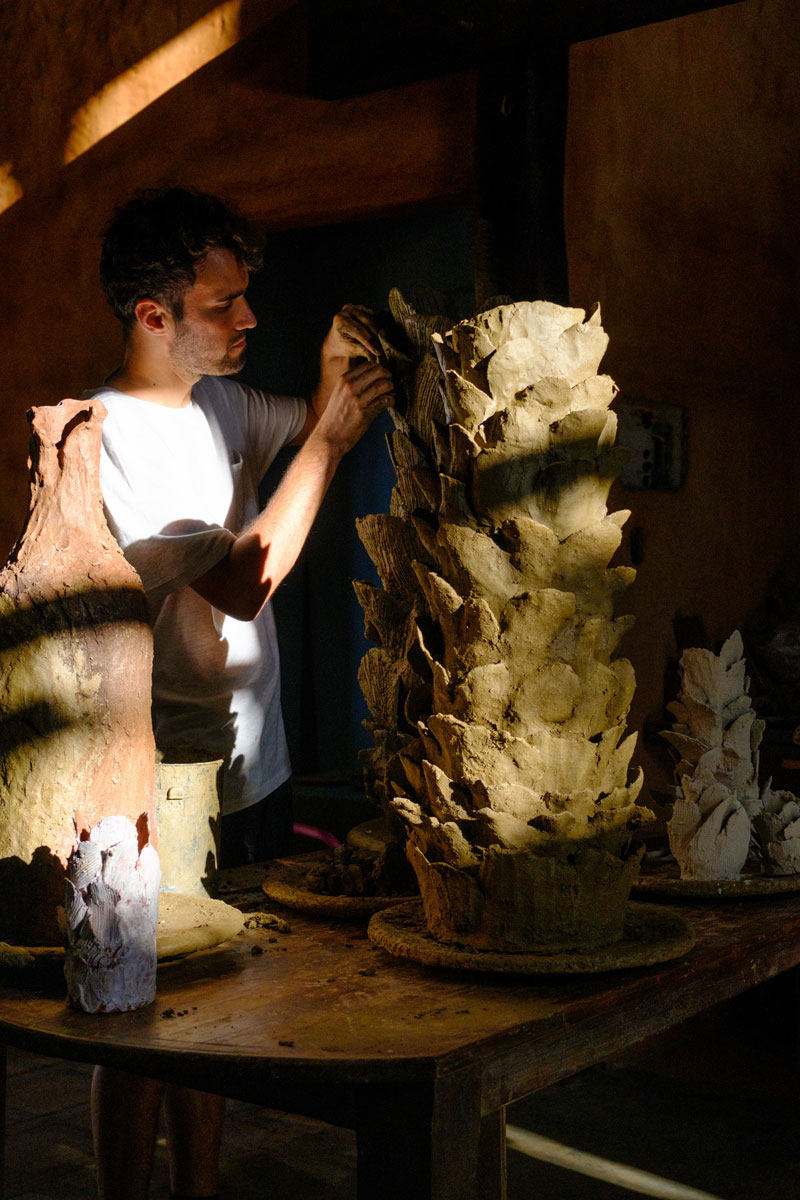
The research, work, and trajectory of Francisca Sosa López allow for the development of this project in which craftsmanship and contemporaneity converge, as her residency on Margarita Island offered the artist the opportunity to reconnect with Venezuela for an extended period of time and learn from the traditions of the artisans in the region. Building on the historical debate that took place during the Renaissance regarding the differences or boundaries between the figures of the craftsman and the artist, one of the main objectives of the residency was to – always respecting the heritage and knowledge passed down by the island’s artisans – expand or resignify from a contemporary perspective the use and possibilities of traditional materials and objects. To this end, the artist investigated the daily habits of the artisans, the history and function of each artisanal manifestation, as well as the intentionality and inherent function of each of the objects she was interested in. In this process, she conceived and built a set of four installative works using various objects originating from island craftsmanship. For each of the installations designed for this exhibition, the artist subverts or disrupts the utilitarian function of the original object, creating new configurations in which a dialogue or tension is established between the traditional and the contemporary. Additionally, Francisca Sosa López leaves her mark by intervening materially and/ or pictorially in the final construction of some of the objects used, paying tribute to the act of weaving.
The work and artistic practice of Francisca Sosa López reflects and explores her connection with home, with the country, with its traditions. The experience of migration and her condition as a woman are also vertical themes that intersect with her original inquiries.
Her work is built from drawing, painting, assemblage, collage, and textiles to create pieces of an installative nature that gradually acquire corporeality, often through formats that play with volume and three-dimensionality. It is a work of abstract nature with deep contemporary echoes both in its narrative and in its technical realization.
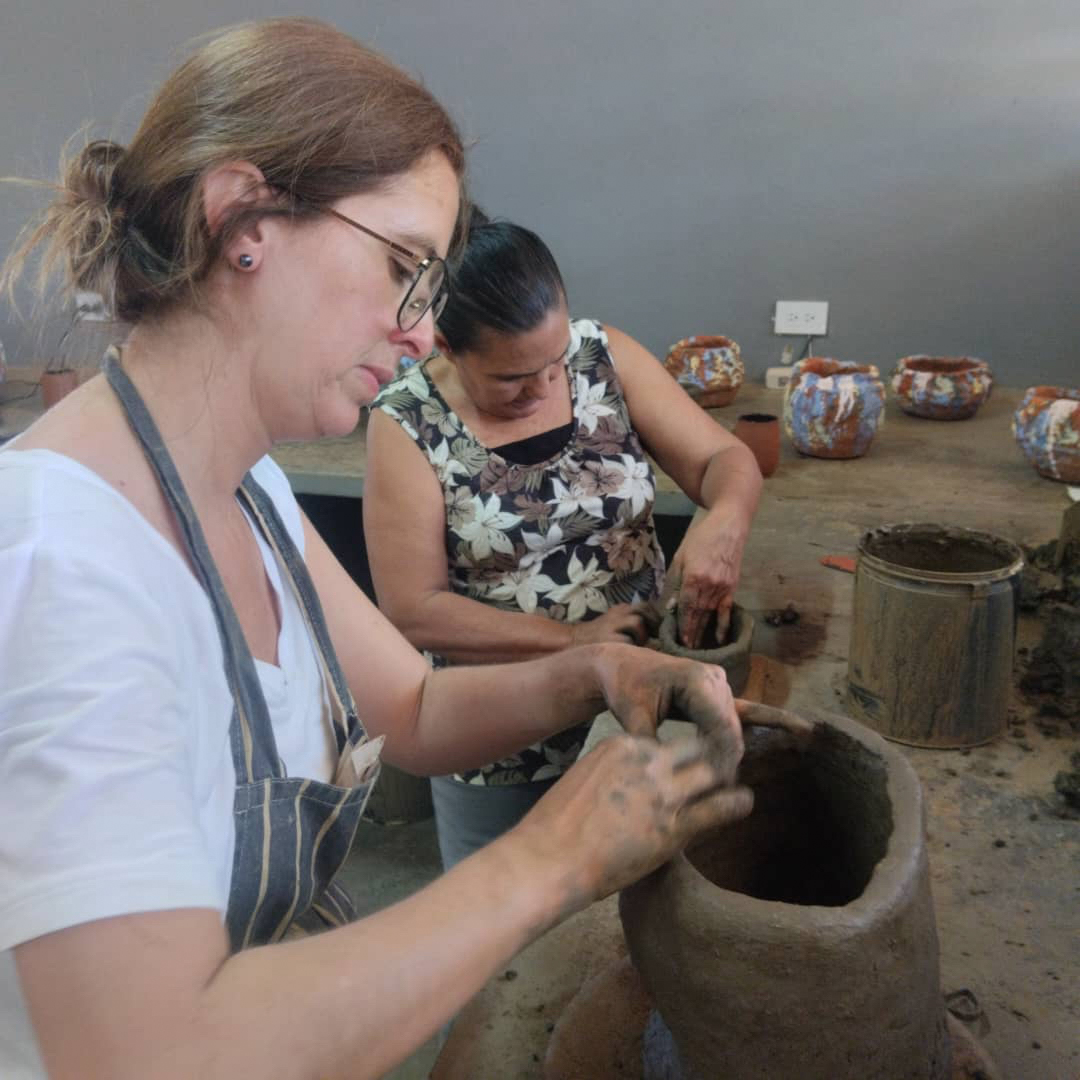
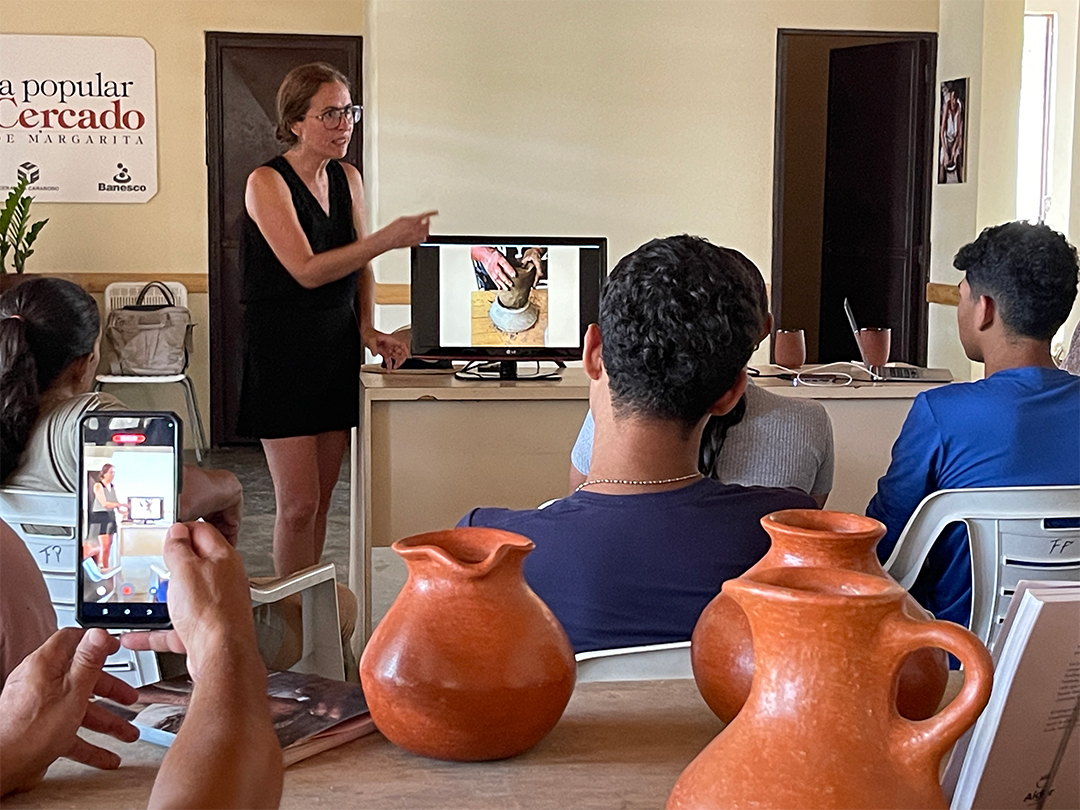
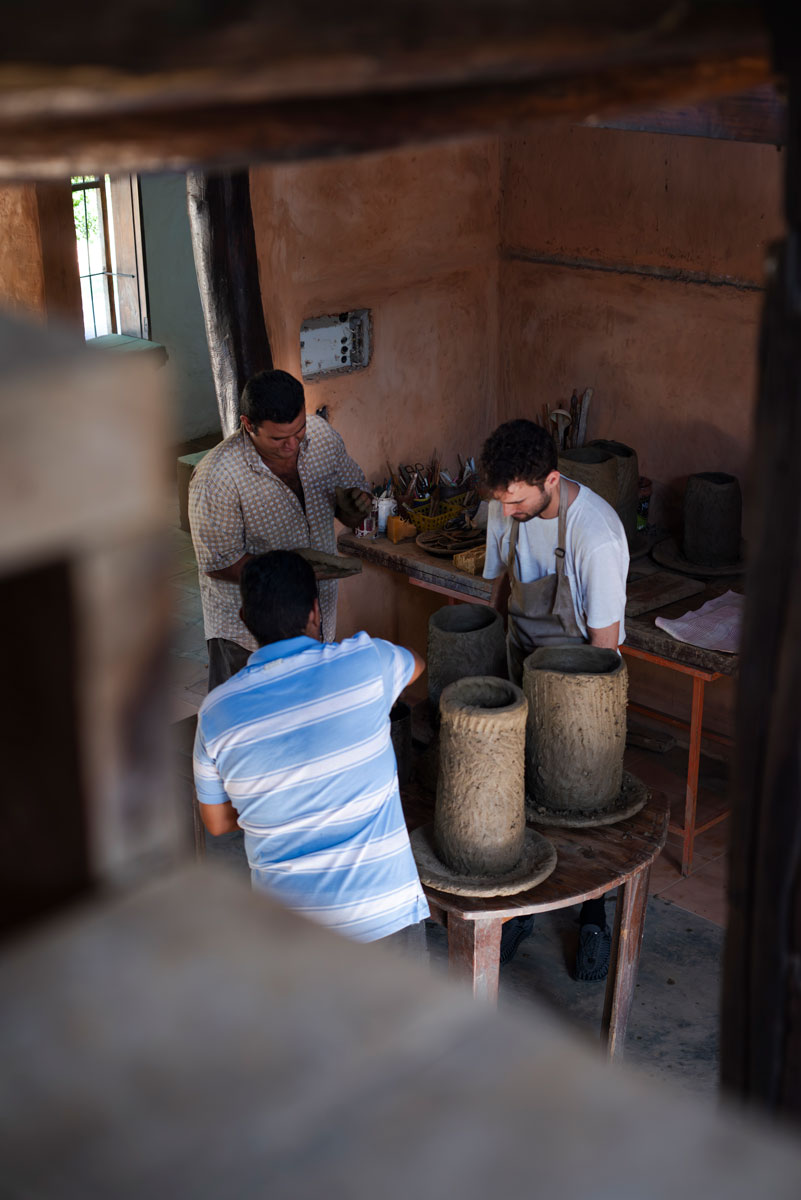
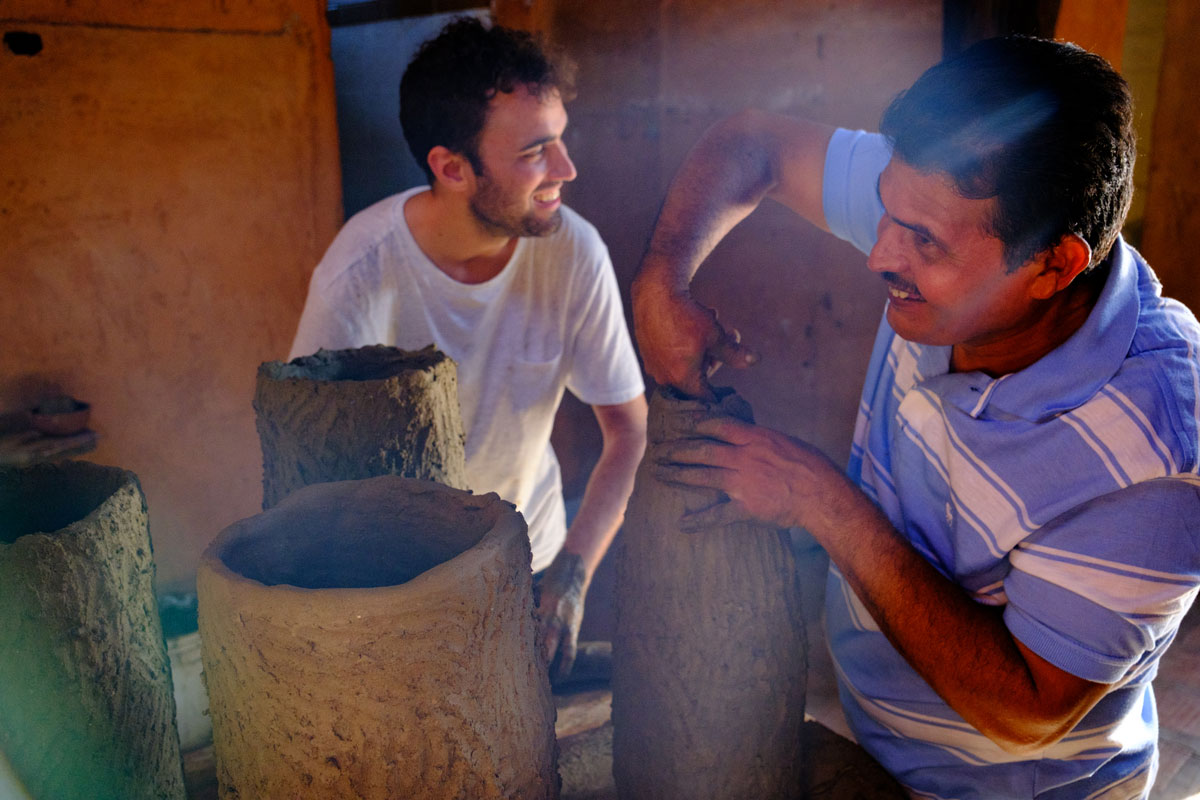
“I feel deeply grateful to the community of El Cercado for their participation in this Residency. It was a frank and enriching exchange, where everyone generously shared their knowledge. At the same time, I had the opportunity to show them a little bit of what is being done in contemporary art and ceramics worldwide.
During our stay, we not only had talks and viewed images, but also worked directly on creation. With the young ceramists, there was an exchange of suggestions and ideas inspired by my work, in which I was able to offer feedback and propose changes or new forms that they could explore. We experimented with new textures, using elements such as palms and corn, which are of great importance to me, since they represent the bread of the Americas and are associated with numerous creation myths from this part of the world.
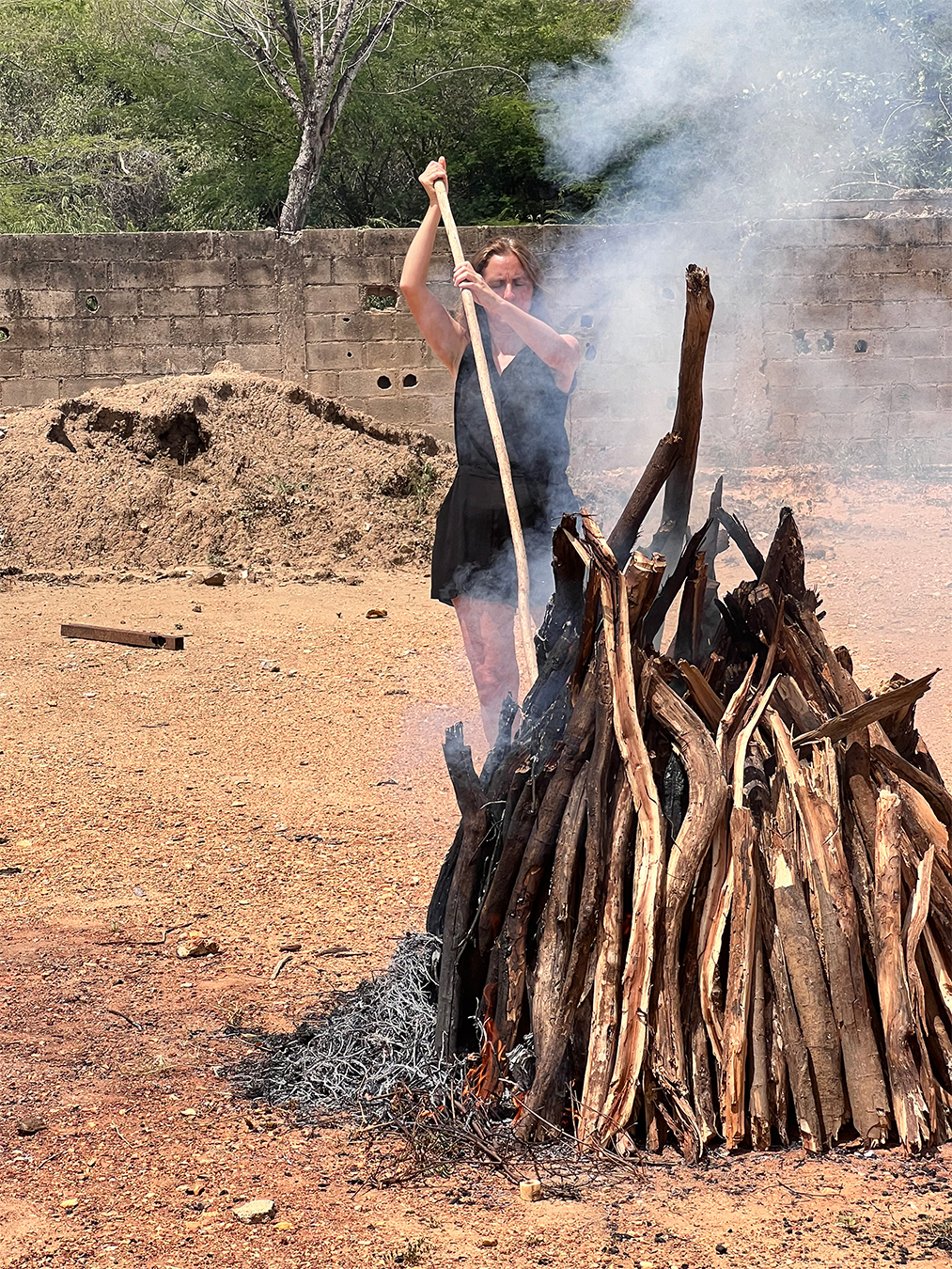
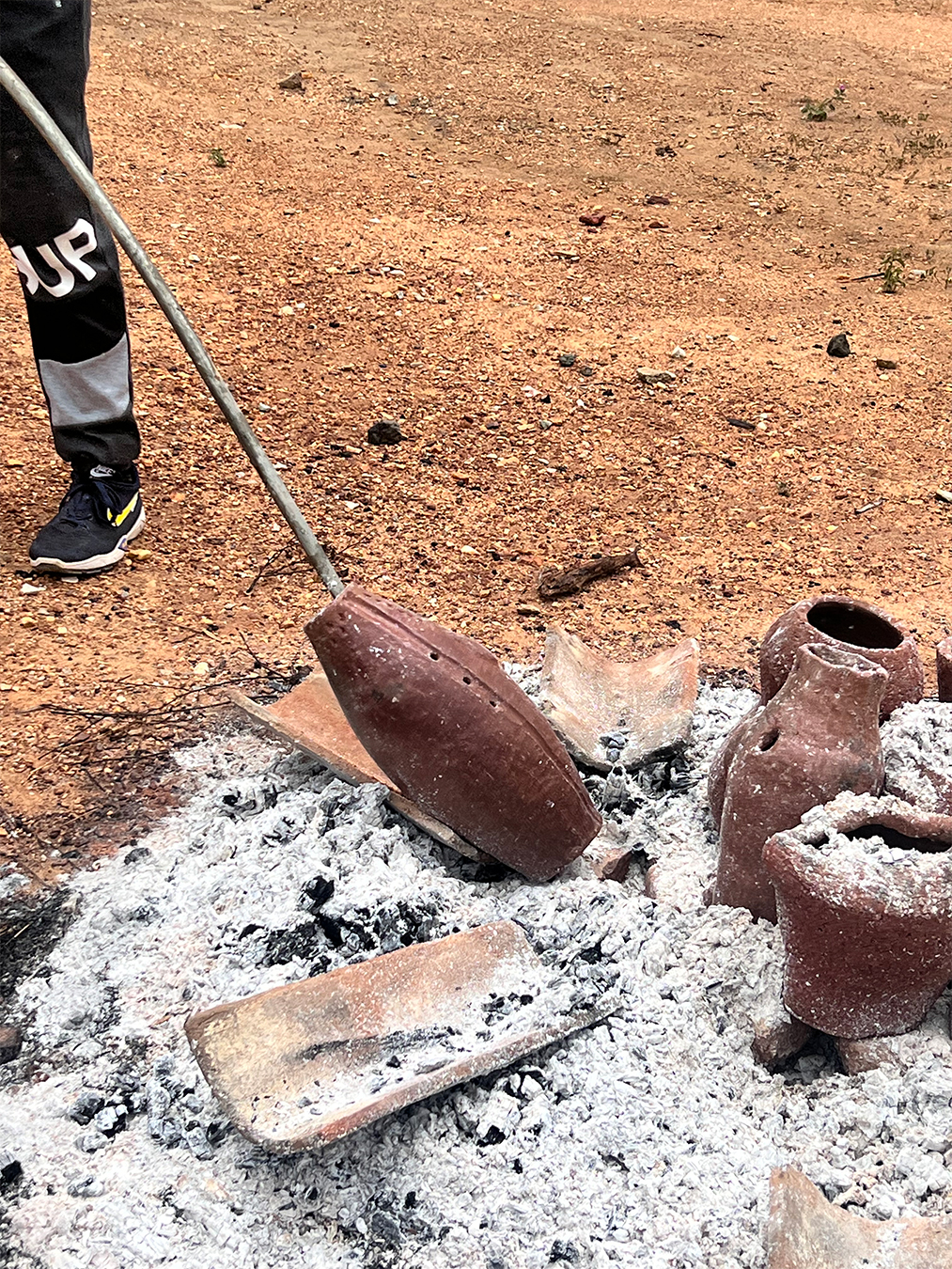
The result was a diversity of pieces rich in rustic and burnished textures, fire in the ancient method of fire pits. I am very happy to take some of these works to present at the Frieze art fair in London with the Cecilia Brunson Projects. Itbis Aldo important as this secured a collaboration between Hacedores de País, the Escuela Taller de Cerámica El Cercado, Fundación ArtesanoGroup and Abra Caracas, who will continue this project within the framework of my exhibition in Caracas, titled Morada Vegetal, open until September 15. Some of the pieces from El Cercado will remain in the back room so that you people see the result of these intense days of sharing, creating, getting to know each other and enjoying the company of this beautiful community”.
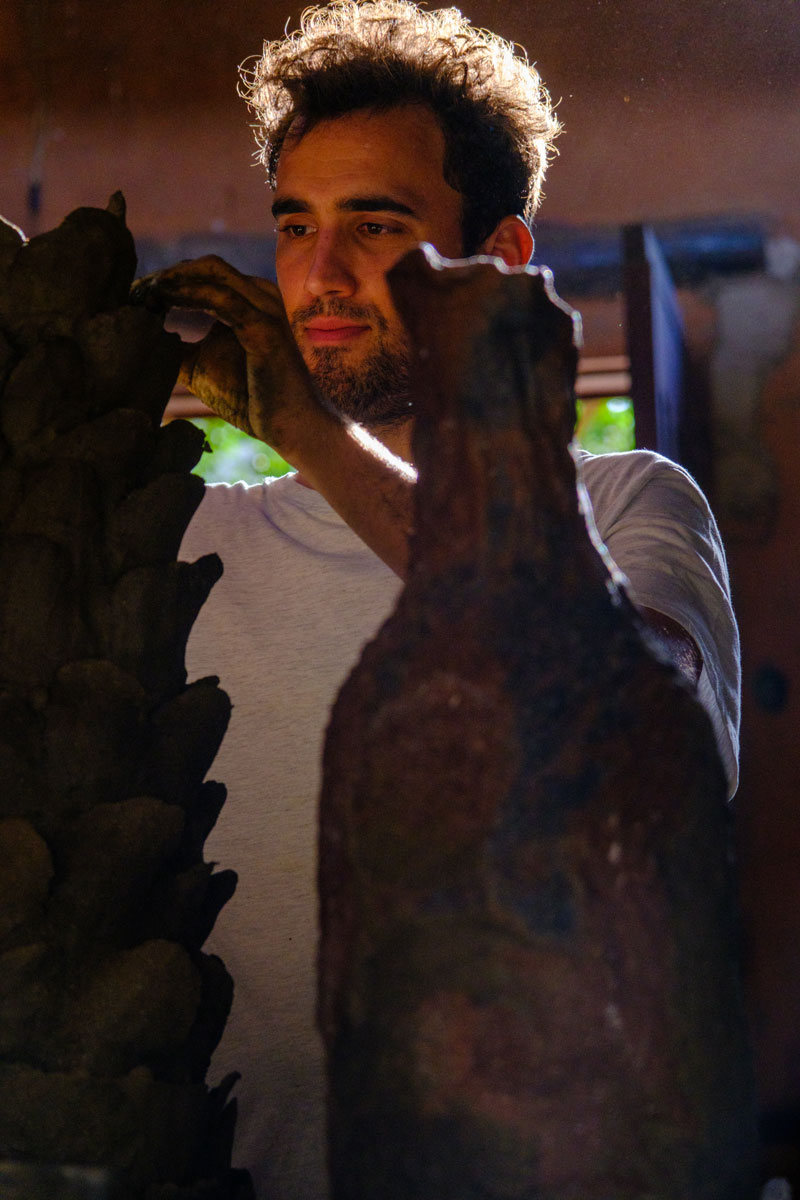
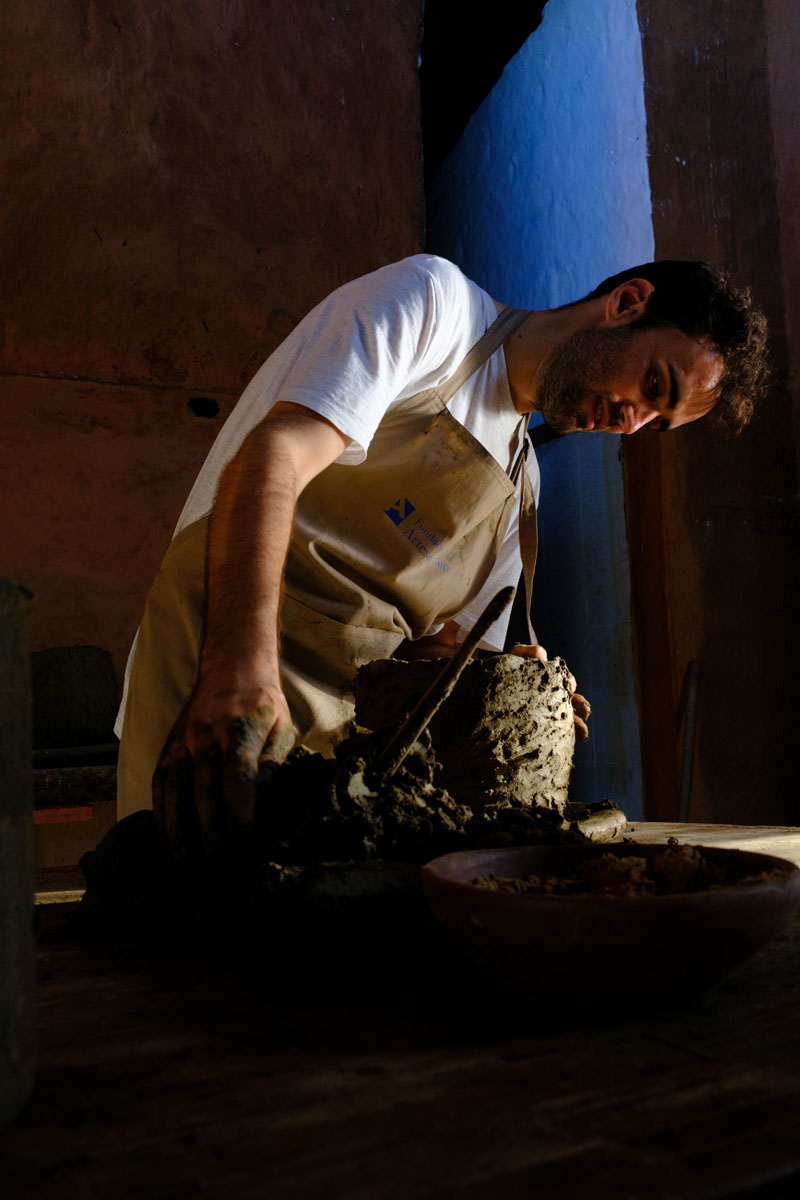
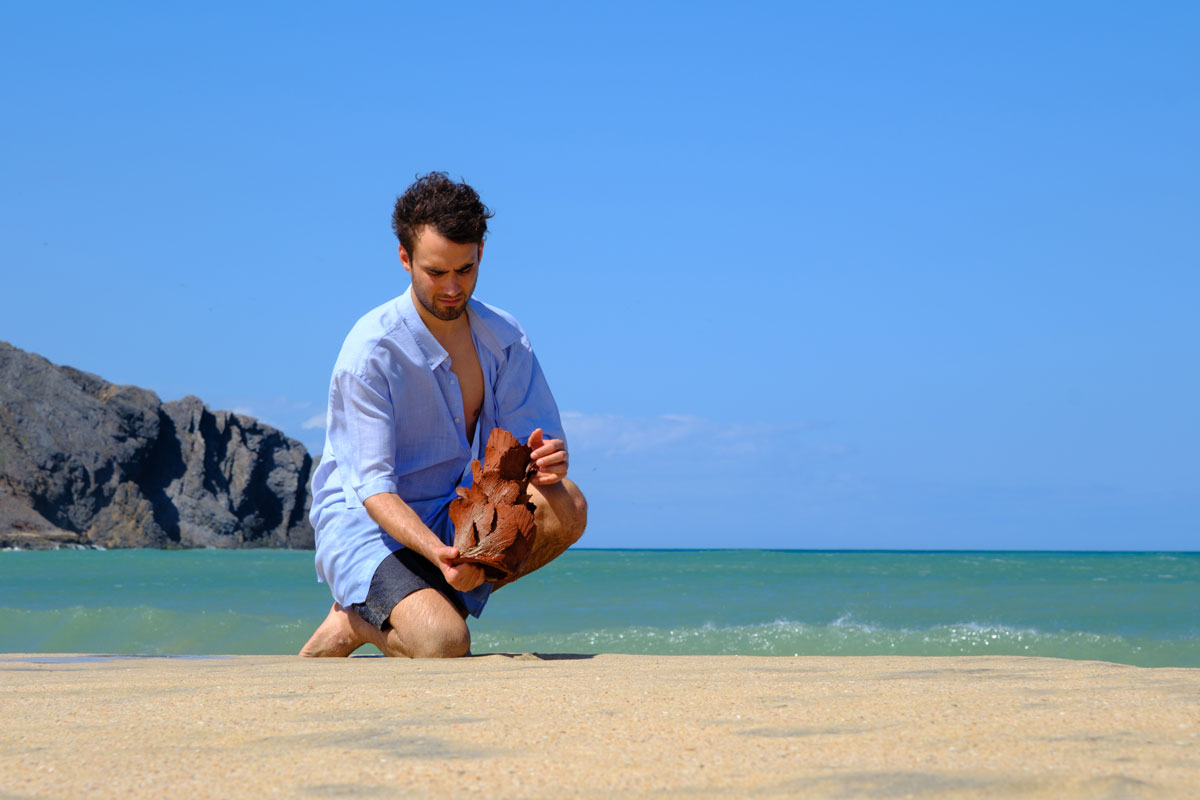
Surrender to the Sea – Surrender to the Earth was an artistic residency developed by Spanish artist Eduardo Palomares on Margarita Island, as part of the Artesano Global Foundation residency program. The project integrated contemporary art, traditional craftsmanship, and environmental awareness through the collective creation of ceramic sculptures designed to dialogue with the territory and remain within the landscape.
For one month, Palomares worked alongside the pottery community of El Cercado, scientists, musicians, artists, and students, developing a knowledge-exchange process that linked ancestral wisdom, scientific research, and contemporary artistic practice. The residency established itself as a space for cultural encounter and ecological reflection, strengthening the bond between creation, territory, and community.
El Cercado: Origins of Clay and Ancestral Transmission
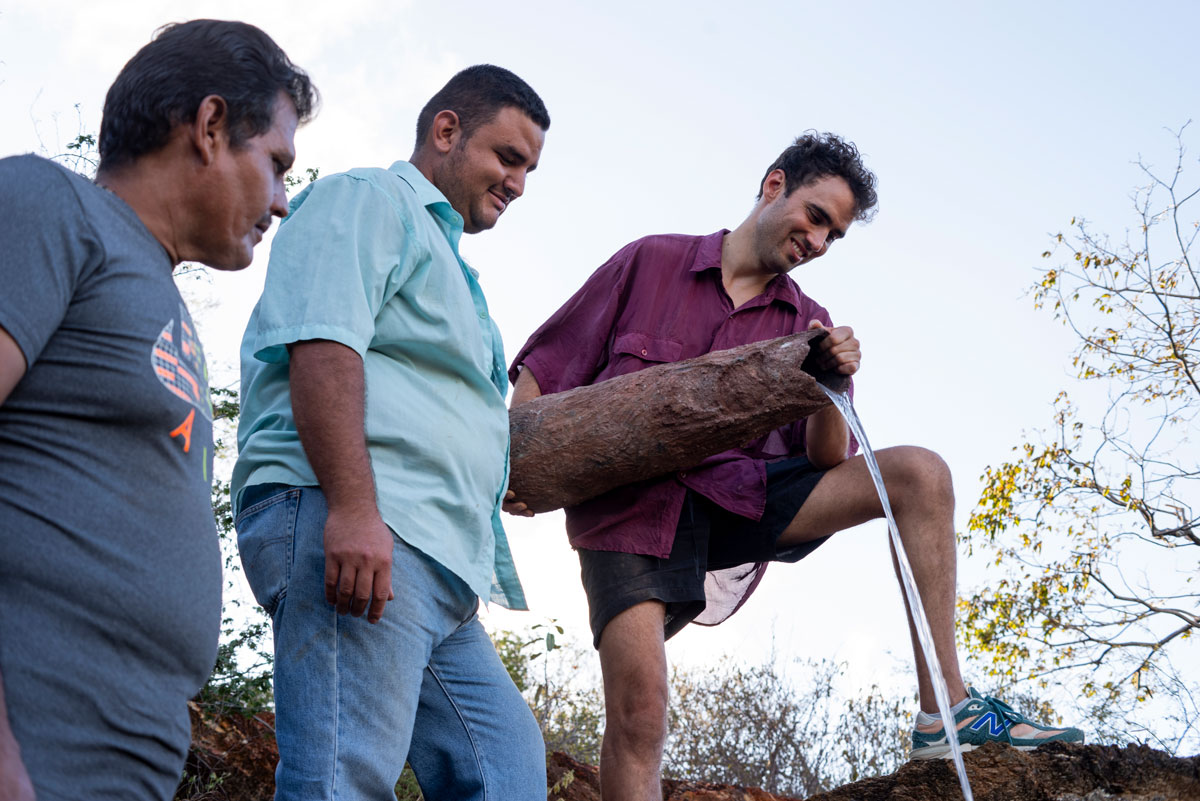
At the century-old Pottery School of El Cercado, and alongside masters Juan José Bermúdez and Juan Alberto Rodríguez, the artist worked with indigenous clay extracted from Cerro La Cruz—a historical site where generations of potters have sourced their materials. This gesture reclaimed ancestral practices and built a bridge between traditional craftsmanship and the language of contemporary art.
The “Deliveries”: Two Symbolic Actions of the Territory
The residency was structured around two performative actions:
Surrender to the Earth: An amphora was taken back to the mountain, reconnecting the material with its origin and emphasizing the link between the natural elements: earth, water, fire, and air.
Surrender to the Sea: A series of sculptures inspired by coral forms and the artistic research Blooming Ocean was installed beneath the waters of Cubagua. This was conceived as a ceramic reef aimed at the ecological regeneration of the marine environment.
Both actions integrated craftsmanship, ecology, and contemporary thought, proposing a symbolic and active perspective on the relationship between humanity and nature.
Interdisciplinary Encounters and Educational Actions
The residency included collaborations with the Porlamar Youth Symphony Orchestra, the Alberto Requena Conservatory of Music and Dance, artists such as Luis Lizardo and Mónica Ferreres, curator Humberto Valdivieso, students, scientists, and the local community.
Furthermore, open activities were held, such as the poetry workshop Habitar el paisaje (Inhabiting the Landscape) and the sensory workshop Azules y Sal de Margarita (Blues and Salt of Margarita), expanding the project’s educational and cultural impact.
A Project Conceived to Endure
The pieces produced were fired using traditional techniques and subsequently delivered to the sea and the mountain. Their permanence in the territory did not represent an ending, but rather the continuity of a symbolic and ecological gesture focused on memory, environmental regeneration, and a shared future.